
cw-manager precheck https://test.com/ – https://test.com
cw-manager precheck https://test.com/ – https://test.com
COVID-19 is a contagious disease caused by the coronavirus SARS-CoV-2. In January 2020, the disease spread worldwide, resulting in the COVID-19 pandemic.
The symptoms of COVID‑19 can vary but often include fever,[7] fatigue, cough, breathing difficulties, loss of smell, and loss of taste.[8][9][10] Symptoms may begin one to fourteen days after exposure to the virus. At least a third of people who are infected do not develop noticeable symptoms.[11][12] Of those who develop symptoms noticeable enough to be classified as patients, most (81%) develop mild to moderate symptoms (up to mild pneumonia), while 14% develop severe symptoms (dyspnea, hypoxia, or more than 50% lung involvement on imaging), and 5% develop critical symptoms (respiratory failure, shock, or multiorgan dysfunction).[13] Older people have a higher risk of developing severe symptoms. Some complications result in death. Some people continue to experience a range of effects (long COVID) for months or years after infection, and damage to organs has been observed.[14] Multi-year studies on the long-term effects are ongoing.[15]
COVID‑19 transmission occurs when infectious particles are breathed in or come into contact with the eyes, nose, or mouth. The risk is highest when people are in close proximity, but small airborne particles containing the virus can remain suspended in the air and travel over longer distances, particularly indoors. Transmission can also occur when people touch their eyes, nose, or mouth after touching surfaces or objects that have been contaminated by the virus. People remain contagious for up to 20 days and can spread the virus even if they do not develop symptoms.[16]
Testing methods for COVID-19 to detect the virus’s nucleic acid include real-time reverse transcription polymerase chain reaction (RT‑PCR),[17][18] transcription-mediated amplification,[17][18][19] and reverse transcription loop-mediated isothermal amplification (RT‑LAMP)[17][18] from a nasopharyngeal swab.[20]
Several COVID-19 vaccines have been approved and distributed in various countries, many of which have initiated mass vaccination campaigns. Other preventive measures include physical or social distancing, quarantining, ventilation of indoor spaces, use of face masks or coverings in public, covering coughs and sneezes, hand washing, and keeping unwashed hands away from the face. While drugs have been developed to inhibit the virus, the primary treatment is still symptomatic, managing the disease through supportive care, isolation, and experimental measures.
Anecdotally, many business owners spend days selecting a logo color and five minutes picking a sign font, then wonder why foot traffic doesn’t improve after a new sign goes up. The question of what fonts and colors work best for business signs isn’t a matter of personal taste, it has concrete, research-backed answers rooted in human vision science and decades of field-tested signage design. This guide covers font selection, color contrast, distance scaling, brand color translation, and the most common errors that undermine an otherwise solid sign. At Sign and Glow, every custom sign project begins with a brand-first design consultation precisely because these decisions carry real commercial stakes. By the end of this article, you’ll have a clear framework to evaluate any sign choice with confidence.
Before a customer reads a single word on your sign, their visual system has already pre-filtered it. Fonts with clean, uniform strokes register at distance; fonts with decorative details turn into visual noise before the brain can extract meaning. Initial impressions form very quickly, often before conscious attention kicks in, and customers who can’t read a sign in a single glance rarely circle back to try again.
Sans-serif typefaces consistently outperform every other category for storefront and roadside signs. Clean, undecorated strokes remain visually distinct at 30, 50, and 200 feet, while serifs and ornate details merge into blur at the same distances. The proven performers are Helvetica, Gotham, Montserrat, Frutiger, Futura, and Open Sans. Helvetica is the most extensively studied option; field testing consistently shows it outperforms ornate alternatives by a wide margin, documented comparisons show readability gains approaching 30% under controlled distance conditions. Treat this as your first filter when deciding what fonts and colors work best for business signs: if a font isn’t a bold sans-serif, it needs a strong justification to appear on primary sign copy.
X-height refers to the height of lowercase letters relative to uppercase letters in a typeface. A high x-height means lowercase letters are proportionally taller, which makes them more readable when a sign is viewed from a distance or at an angle. Font weight compounds this effect: a Bold or Heavy variant of any legible font outperforms its Regular counterpart, especially on signs that face direct sun or age outdoors over time. When selecting a typeface for a storefront sign, choose Bold or Heavy by default and treat Regular weight as an option only for secondary or supplemental text.
The most technically correct font choice will still fail if the letters are sized wrong for the distance at which your customers will first read the sign. Sizing for viewing distance is where most DIY sign decisions break down, and it’s the reason a sign that looks perfect in a design file reads as a blur from a passing car.
The industry-standard formula is straightforward: one inch of letter height for every 10 feet of viewing distance. At 10 feet, the minimum is one inch; at 50 feet, five to seven inches; at 200 feet, 20 to 24 inches. For high-traffic or fast-moving environments such as roadside signs or drive-throughs, double the height (two inches per 10 feet) to guarantee faster recognition. For designers working in software, multiply the target inch height by 72 to get the equivalent point size: a five-inch letter equals 360 points.
Letter height gets most of the attention, but stroke width and spacing are equally critical. Stroke width should stay between one-fifth and one-sixth of the letter height; any thinner and strokes vanish at distance, particularly on aged or weathered signs.
Letter spacing (tracking) should increase as viewing distance grows. Use 10 to 15% of letter height at close range and step up to 15 to 20% at 50 feet or beyond. Wider spacing prevents characters from visually merging before the reader’s eye can separate them. Word spacing should equal at least the width of a capital “O” so individual words remain distinguishable from a distance without conscious effort from the reader.
Color is where sign decisions often become subjective when they absolutely shouldn’t be. The combinations that produce the highest legibility in outdoor conditions are well-documented, and the gaps between the top performers and the failures are significant enough to measure in lost customer attention. Choosing the right pairing is central to understanding what fonts and colors work best for business signs.
Each of the following pairings serves a specific role, and treating them as interchangeable is a mistake. Black on yellow registers one of the highest measured luminance contrasts in human vision research, approximately 19.56:1 by WCAG luminance calculations, and belongs on urgent calls to action. (Pure white on black can yield an even higher ratio near 21:1, making it the absolute ceiling for contrast.) Black on white and white on black are the reliable standards for informational and regulatory content. White on blue signals trust and is the backbone of highway guide signage worldwide. Yellow on black offers the same high contrast ratio as black on yellow with a different visual character suited to premium-tier brands. Red on white grabs immediate attention for promotional content but may become visually tiring if applied as a primary sign color across an entire frontage.
If the brightness difference between your text color and background is less than 70%, legibility cannot be reliably guaranteed in field conditions. The professional benchmark, drawn from industry standards and signage best practices, is a 75 LRV (light reflectance value) gap between foreground and background: convert both colors to grayscale and check for an obvious light-to-dark difference. If they look similar in grayscale, they’ll fail at 30 feet in daylight. The digital standards increasingly applied to physical signage are a 4.5:1 contrast ratio for normal-sized text and 3:1 for large display text; both are worth checking during the design phase even for non-digital signs.
Brand color preservation is the tension point where most business owners push back on professional sign guidance, and understandably so. The brand palette represents real investment and recognition equity. The good news is that most brand colors translate into signage with the right approach; the cases where adaptation is necessary are predictable and manageable.
A dark primary brand color paired against a white or near-white background, or a white wordmark on a richly saturated dark brand color, typically meets the 70% brightness differential without any modification. Run the grayscale self-test: convert both your text color and your background color to grayscale and look for an obvious contrast difference. If text and background look similar in grayscale, they’ll fail at 30 feet in daylight regardless of how vibrant they appear on screen. Many brand palettes pass this test without any adjustment at all.
The common tension point is a brand signature color that sits in the mid-tone range, meaning it lacks sufficient contrast against both white and black backgrounds. Two practical solutions resolve this without abandoning the brand identity. First, shift the brand hue moderately darker or lighter while staying within the same color family; the color relationship remains recognizable even when the exact value changes. Second, introduce a high-contrast neutral (white, off-white, or charcoal) as the background and let the brand color own the lettering or border treatment. This is the kind of color translation problem Sign and Glow’s brand-first consultation is built to solve, ensuring the palette survives fabrication without losing storefront impact.
Every category listed below appears on real commercial signs in real markets right now, and every one of them is reducing the business’s visible reach. Knowing what to eliminate is as actionable as knowing what fonts and colors work best for business signs.
Five categories consistently fail on primary sign copy and reduce legibility at distance:
Script elements in a logo can stay in the logo. Primary signage copy should always pair a script logo with a clear, bold sans-serif for the main message text.
Red on black and dark green on black both fail due to insufficient value difference between the two colors. Red text on a blue background creates visual vibration that forces the eye to work harder than any storefront sign should demand. Pastel-on-light combinations disappear entirely in bright midday sun. Red-on-green pairings are inaccessible to a significant portion of colorblind viewers and should be avoided in any public-facing sign context. Finally, all-capitals body copy slows reading speed by roughly 10 to 20% compared to mixed-case text due to reduced word-shape recognition; reserve all-caps for short, high-impact single words where the trade-off is worth it.
ADA compliance for business signs is often misunderstood as applying only to large commercial buildings or government facilities. In practice, any permanent room identification sign in a U.S. commercial building must meet specific standards, and the visual contrast requirements apply more broadly than most business owners realize.
The ADA Standards for Accessible Design do not prescribe a specific numerical contrast ratio. They require “high contrast,” defined as light characters on a dark background or dark characters on a light background, on a non-glare surface. In practice, the professional benchmark that satisfies this requirement is a 70% brightness differential or a 75 LRV gap between text and background. Permanent room identification signs (restrooms, exits, stairwells) must also include raised tactile characters sized between 5/8 inch and 2 inches in height, accompanied by Grade 2 Braille. These tactile requirements do not apply to directional or wayfinding signs, but visual contrast and character sizing standards still apply to both.
A gloss or reflective face finish can make a technically high-contrast sign illegible for low-vision users because of light bounce off the surface. Matte or satin finishes are the standard recommendation for any sign where ADA compliance or broad accessibility is a consideration. For permanent room identification signs, the ADA specifies a mounting height range of 48 to 60 inches from the floor to the baseline of the lowest tactile character. Wayfinding and directional signs don’t require tactile characters, but visual character height must still scale to the distance at which a person will first encounter the sign, following the same one-inch-per-10-feet principle that governs all legible signage.
The best fonts and colors for business signs aren’t subjective choices that come down to preference. They follow a set of proven principles around legibility, contrast, and viewing distance that apply regardless of industry, brand personality, or budget. The core decision chain is consistent: start with a bold sans-serif typeface, confirm your color pair clears the 70% brightness differential, scale letter height to the actual distance at which your customers will first read the sign, eliminate anything thin, scripted, or low-contrast from primary copy, and verify ADA requirements for any permanent interior room identification signs.
Brand color doesn’t have to be abandoned to achieve a legible, high-impact sign. It has to be applied correctly, with the right contrast relationships and the right material finish to perform in real outdoor and indoor conditions. These principles give you a decision framework that holds regardless of brand, budget, or building type, and a partner like Sign and Glow gives you the fabrication quality to make those design decisions count at the storefront level.
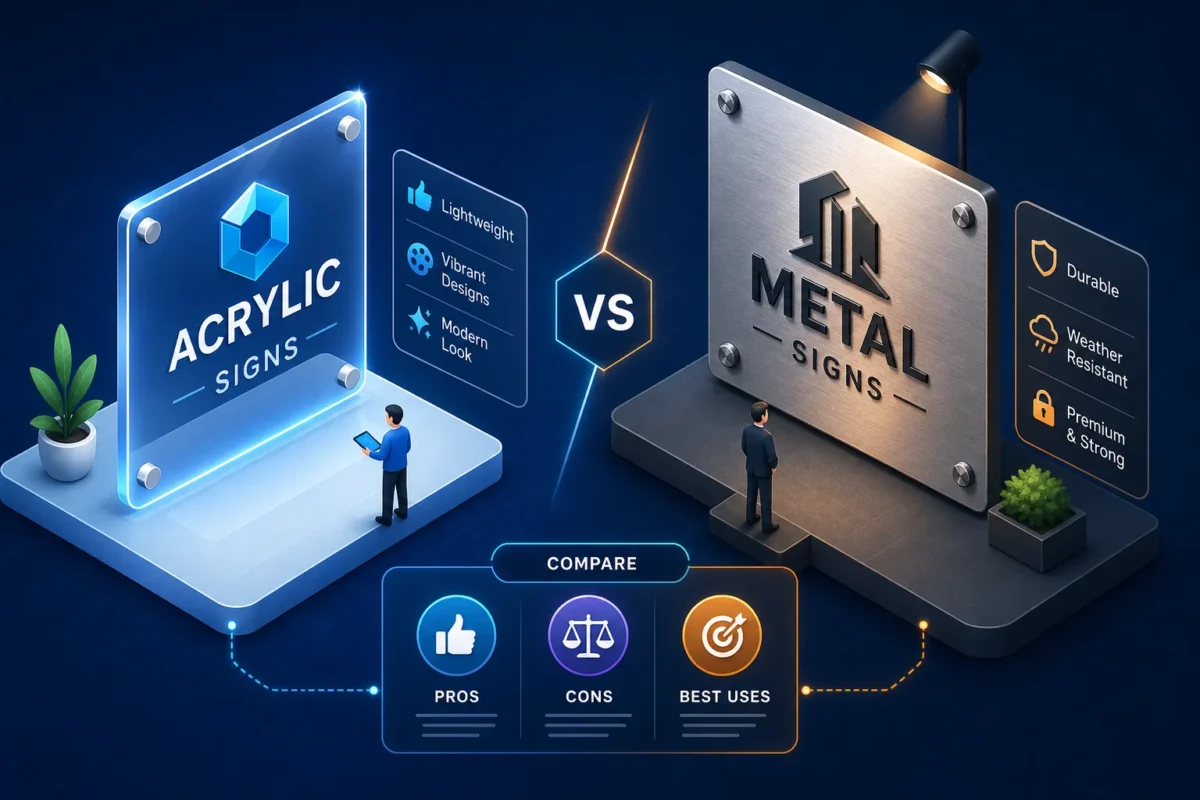
When comparing acrylic signs vs metal signs for business, the right material depends on where your sign will live, how long you need it to last, and what your brand needs to communicate visually. You’re getting quotes for a new storefront sign, and two material options keep coming up, acrylic and metal. Both look sharp in photos. Both come in custom sizes. And nobody at the sign shop is giving you a straight answer on which one actually fits your brand, your building, and your budget.
At Sign and Glow, we fabricate both materials daily for businesses across the U.S., and this question comes up on almost every project. The honest answer is that neither material wins outright. This guide breaks down appearance, durability, cost, installation requirements, and industry fit so you can make a confident call before production begins.
| Factor | Acrylic | Metal (Aluminum / Dibond) |
|---|---|---|
| Best environment | Indoor / covered exterior | Outdoor / weather-exposed |
| Typical cost per sq ft | $18, $35 | $12, $50+ |
| Outdoor lifespan | 7, 12 years (cast, UV-stabilized) | 10, 20+ years (powder-coated) |
| Weight (12×18 in) | ~4.4 lbs | ~1.6, 3 lbs (flat panel) |
| Backlighting | Excellent | Limited |
| Faux finish options | Frosted, glossy, matte, clear | Brushed, anodized, powder-coated |
| Installation complexity | Lower (interior) | Higher (exterior / structural) |
Before comparing specs, understand what each material communicates visually. The way a sign reads from 30 feet away shapes how customers perceive your business before they ever walk through the door, and that first impression is shaped entirely by material choice.
Acrylic’s high-gloss, glass-like finish reads as clean, contemporary, and polished. It is uniquely well-suited to edge-lit and backlit applications because of its light-transmission and optical clarity. Colors reproduce with high-saturation output on acrylic storefront signs, and the material is available in clear, frosted, glossy, and matte sheets, each with a distinct visual personality that suits everything from wellness studios to modern retail boutiques and tech-forward offices.
Brushed aluminum and powder-coated metal read as established, grounded, and authoritative. The physical weight and surface texture of metal add a depth that flat printing simply cannot fake. Faux-metal finishes can mimic the look at a distance, but real metal typically provides greater depth and texture on close inspection. Law offices, financial firms, premium restaurants, and exterior monument signs commonly specify metal precisely because that sense of permanence is part of the brand message.
For any sign that lives outside year-round, material durability is the single most important factor affecting long-term ROI. Getting this wrong means replacing a sign years before you planned to.
Aluminum is highly resistant to freeze-thaw cycles, acid rain, road salt, and extreme heat when properly finished with powder coat or anodized treatment, without the warping, rusting, or delaminating that affects lesser materials. Those finishes extend outdoor lifespan to 10 to 20-plus years in commercial use, and UV exposure typically degrades only the print or paint layer, not the metal itself. Dibond (aluminum composite material) is a particularly popular option for flat outdoor panels that need structural rigidity at a lighter weight, holding up in demanding environments for a decade or more with minimal maintenance.
Cast acrylic performs meaningfully better than extruded acrylic in outdoor conditions, lasting 7 to 12 years under the right circumstances. The problem is prolonged direct sun: yellowing, micro-cracking, and color fade accelerate significantly in high-UV states like Arizona, Nevada, and Florida, where standard grades can show visible degradation within three to five years. Acrylic works well in covered entryways, shaded facades, or mild climates when paired with UV-stabilized inks and protective laminates. Even with those precautions, backlit acrylic sign faces often need replacement at the 8 to 10-year mark.
Material choice directly affects your budget, but not always in the direction people expect. Understanding the cost structure before you get quotes prevents sticker shock and helps you compare proposals accurately.
Standard acrylic signs range from $18 to $35 per square foot, while aluminum flat panels typically run $12 to $25 per square foot. At first glance, that makes metal the more economical option for flat signage. But custom CNC-cut or dimensional metal signs push costs to $15 to $50-plus per square foot due to fabrication labor, narrowing the gap considerably. Total acrylic project costs typically land between $200 and $2,000; comparable metal projects often run $500 to $5,000 for fully finished, fabricated pieces.
Some finishes are simply not available across both materials, and that affects the final look in ways that matter. Metal is the preferred choice for brushed, anodized, and powder-coated finishes, including custom Pantone-matched colors and two-tone treatments. Acrylic is the most common material for frosted sheets, edge-lit clarity, second-surface printing, and backlit face applications, though some backlit systems can be constructed differently using other substrates. Both materials accept UV direct printing and vinyl overlays, but the base surface texture changes the final appearance significantly. Powder coat on metal also provides far superior UV and weather resistance compared to acrylic laminates in outdoor settings.
Material weight affects more than shipping costs. It determines the hardware required, the structural demands on your building, and whether you need a licensed installer on-site before your sign goes up.
A 12 by 18-inch acrylic panel weighs roughly 4.4 pounds, while a comparable aluminum flat panel runs closer to 1.6 to 3 pounds, though large dimensional metal letters are substantially heavier. Acrylic can often be flush-mounted or adhesive-secured for smaller formats, with standoff mounts used for larger pieces. Metal signs, especially large outdoor channel letters, require stud mounting into structural blocking. Hollow drywall cannot handle the load without toggle anchors, and skipping that step risks a sign that pulls away from the wall.
Large exterior metal signs and any illuminated options almost always require a licensed installer, particularly when electrical connections are involved. Acrylic works faster for interior installs: basic screws, threaded studs with quarter-inch to half-inch spacers, or raceway systems handle most formats without structural reinforcement. For either material, stud mounting with spacers is the industry-standard recommendation. It delivers a clean, floating look and a secure hold on any wall substrate, regardless of whether the sign is headed for a glass lobby wall or a brick exterior facade.
The clearest way to choose between these two materials is to look at where the sign will actually live and what your industry communicates to customers through material choice.
Reception areas, retail interiors, restaurant feature walls, and lobby directories are natural fits for acrylic. The light-forward finish and accurate color reproduction perform best under controlled interior lighting, and the lower weight means faster installation without structural reinforcement, which matters in leased spaces with landlord restrictions. Edge-lit and backlit acrylic panels work particularly well for brands that want a premium interior presence on a mid-range budget.
Exterior monument signs, building identification signage, and fascia-mounted letters in high-sun or weather-exposed locations should default to aluminum or Dibond for long-term performance. Metal’s resistance to temperature swings, moisture, and UV degradation makes it the reliable choice for year-round outdoor commercial signage. For businesses in northern states dealing with harsh winters or southern states absorbing intense UV year-round, metal sign durability is a genuine long-term cost advantage: you replace it far less often.
Reading an acrylic vs metal sign comparison is useful groundwork. Actually seeing your logo rendered in brushed aluminum versus gloss acrylic on your specific storefront wall is how confident decisions get made.
Many businesses that get stuck on this choice are working from generic material samples or stock photos pulled from a catalog, not from a preview built around their actual brand colors, proportions, and building environment. That gap between a sample card and your real sign is where regret on custom fabricated pieces comes from. A free 3D mockup lets you compare both finishes side by side before any production begins, greatly reducing uncertainty and giving you something concrete to approve.
Sign and Glow builds acrylic and metal signs entirely to order, with no off-the-shelf formats and no material compromises. Every project typically starts with a free 3D mockup so clients can see how each material works with their logo before anything goes into production. A dedicated project manager handles material guidance, finish selection, permitting questions, and delivery logistics across all 50 states. Whether acrylic makes sense for your interior or metal is the right call for your exterior, fabrication quality stays consistent throughout. Sign and Glow typically quotes 5 to 7 business days for standard projects, subject to size and permitting requirements.
The choice comes down to two clear factors: environment and budget. Acrylic excels in indoor settings with modern aesthetics, fast installation, and strong visual impact at a lower total cost. Metal earns its place outdoors with superior durability, finish depth, and a longer service life that lowers your replacement cost over time.
Let your environment and budget drive this choice more than personal preference. The numbers are clear enough to make it a practical decision, not just an aesthetic one. A sign that looks great on Day 1 but degrades in three years costs far more in the long run than the right material chosen upfront.
For most businesses, the answer to acrylic signs vs metal signs comes down to location: indoor and covered applications favor acrylic; exposed exteriors favor metal. The fastest way to settle this for your specific brand is to see both options rendered on your actual signage before you order. Request your free 3D mockup from Sign and Glow and get a side-by-side look at how each material works with your logo, your colors, and your location before a single dollar goes into production.
Picture a neon storefront sign running 14 hours a day, quietly pulling 450 watts and adding several hundred dollars to the annual electric bill. Now picture the LED sign next door drawing 65 watts for the same footprint, the same brightness, and a fraction of the operating cost. When you compare energy efficient LED signs vs conventional storefront signs, that gap is not theoretical, there is enough real-world data behind it that business owners can run actual numbers today, not just rely on a salesperson’s word.
LED sign technology has advanced far enough that modern units match or outperform neon on nighttime visibility while lasting twice as long. Sign and Glow builds LED channel letters, edge-lit acrylic, and halo-lit metal signs engineered to hold color consistency over time, a meaningful advantage over glass neon, which shifts in hue as it ages. What follows is a practical cost-comparison guide covering wattage numbers, a payback formula you can use today, maintenance math, rebate sources, and a framework for deciding whether to retrofit or replace your existing sign.
Before any cost math makes sense, the wattage difference needs to feel concrete. LED storefront signs draw 1.2 to 10 watts per foot depending on design. Traditional glass neon runs 15 to 100 watts per foot. Fluorescent signs consume 60 to 80 watts per foot. Put those ranges into a real scenario: a 10-foot neon sign can draw anywhere from 150 to 1,000 watts, while an equivalent LED channel letter sign draws 12 to 100 watts for the same linear footage. For businesses that want the neon aesthetic without the neon energy bill, LED neon flex tubing delivers the same warm glow at just 3 to 4 watts per foot.
Applied to a standard 12-hour operating day at the U.S. national average commercial electricity rate of $0.18 per kWh, the numbers sharpen quickly. A 450W neon sign running 12 hours daily consumes roughly 1,971 kWh per year and costs approximately $355 annually in electricity alone. A comparable 65W LED sign running the same schedule uses about 285 kWh per year and costs around $51. That is a difference of more than $300 per sign, per year, before maintenance enters the picture. In high-rate markets like California, New York, and the Northeast, where commercial electricity regularly runs above $0.20 per kWh, annual energy savings per sign can push closer to $350 to $400.
The purchase price is where LED and neon comparisons most often mislead business owners. For a standard 8 to 12-foot illuminated storefront sign in 2026, installed costs break down as follows: LED signs run $3,500 to $6,000 installed, glass neon runs $4,500 to $8,000 installed, and fluorescent (increasingly rare for new installs) runs $3,000 to $6,000 installed. Neon commands a premium because custom tube bending adds skilled labor cost that LED fabrication does not require. On sticker price alone, LED already competes favorably or comes out ahead.
LED signs are rated for 50,000 to 100,000 hours, which translates to 10 to 20 years at 12 hours per day. Neon realistically lasts 8 to 10 years outdoors before tube cracking, gas depletion, or transformer failure requires professional service. Annual maintenance for an LED sign runs $0 to $50, mostly cleaning.
Neon maintenance averages $200 to $1,000 per year because of specialist repair calls, gas refills, and transformer replacements, and those costs compound. Over a 10-year period, using a conservative midpoint of $500 per year for neon against $50 per year for LED, the maintenance gap alone reaches approximately $4,500, with the full range running $1,500 to $9,500 depending on sign complexity and local labor rates. That gap sits on top of the higher electricity costs running in parallel.
The formula is straightforward: divide the upfront cost premium of the LED sign over your existing sign by the annual energy and maintenance savings. Define each variable clearly before plugging in numbers, power difference in watts, operating hours per day, local electricity rate, and annual maintenance savings all feed into the calculation. The LED sign is typically 15 to 20 percent more expensive upfront than a comparable neon sign, but the annual savings begin on the first day of operation.
Here is what the math looks like in a real scenario. A 10-foot neon sign at 450W versus an LED equivalent at 65W, running 12 hours per day at $0.18 per kWh, saves approximately $303 per year in electricity alone. Add $300 in avoided neon maintenance costs for a conservative first-year savings of roughly $600. If the LED sign costs $400 more upfront, the payback window is under 12 months. Most businesses see a payback period of 12 to 24 months even in more conservative scenarios, and the LED sign then runs at a net savings for another 10 to 15 years afterward.
To run your own version, follow these steps:
The financial case is strong, but switching signs also requires confidence that the visual result holds up. A common assumption is that neon looks warmer or more authentic. Modern LED signs deliver consistent illumination across the full sign face without the hot spots or dim zones that appear in aging neon tubing. LED brightness holds steady across a wide temperature range, whereas neon tube output can drop noticeably in cold weather, which matters for businesses in northern markets open through winter.
For outdoor use, IP-rated LED signs handle rain, humidity, UV exposure, and temperature swings from -40°F to over 170°F without the risk of moisture seeping into glass tubes or corroding transformer housings. LED neon flex in particular offers IP65 to IP67 weatherproofing in a shatterproof silicone shell, making it far more resilient than glass neon in any outdoor climate. From a standard storefront viewing distance of six feet or more, most customers cannot visually distinguish LED flex from glass neon.
Sign and Glow builds each LED sign to order using weather-resistant, IP-rated components suited for commercial outdoor use across U.S. climates. Their LED neon flex options deliver the warm aesthetic at 3 to 4 watts per foot for businesses that want the look without the maintenance commitment, a practical combination of energy efficiency and visual impact that glass neon cannot match on both fronts simultaneously.
Between federal deductions, utility cash rebates, and state programs, businesses can recover 15 to 60 percent of project costs. The most significant federal benefit is the Section 179D Energy Efficient Commercial Buildings Deduction, now permanent under the Inflation Reduction Act. It covers up to $5.81 per square foot for qualifying lighting upgrades that meet prevailing wage and apprenticeship requirements.
Qualifying LED systems may also be eligible for bonus depreciation under Qualified Improvement Property rules, confirm current rates and thresholds with your tax advisor before filing, since sign system type and installation method affect which provisions apply and IRS guidance evolves year to year.
Utility rebates are the most direct source of cash-back funding for exterior signage. Common program structures include $15 to $75 per fixture for prescriptive retrofits, $0.15 per kWh saved for performance-based programs, and up to $0.35 per watt in demand-reduction markets like Arizona. Named programs worth investigating include Mass Save in Massachusetts, NYSERDA in New York, the New Jersey Clean Energy Program, and Oncor and CenterPoint in Texas. Rebates are available in 47 states covering approximately 77 percent of the U.S. The fastest way to find current programs in your utility territory is DSIRE (dsireusa.org) and ENERGY STAR’s commercial rebate finder. One important note on eligibility: most utility programs require pre-approval before purchasing equipment, and LED-to-LED retrofits are often excluded, meaning the rebate typically applies when replacing neon, fluorescent, or HID sources with LED.
Not every business needs to remove an existing sign cabinet and start over. LED neon flex tubing can be installed inside many existing lightbox cabinets or channel letter housings, replacing fluorescent or glass neon elements without fabricating a new sign structure. This path works well when the sign cabinet and mounting hardware are still in solid condition and the primary concern is energy cost and bulb reliability. A retrofit is typically lower cost than a full replacement and may qualify for utility rebate programs, though eligibility varies by program, so confirm requirements with your local utility before purchasing equipment. DSIRE is a reliable starting point for checking what your utility allows.
Full replacement makes more financial sense when the existing sign is older than 8 to 10 years, shows rust, has faded acrylic, or carries brand elements that no longer match a current logo. Retrofitting deteriorating infrastructure does not extend the structural life of the sign, and the labor cost can approach what a new unit would cost. A purpose-built LED sign unlocks the full 10 to 20-year product lifespan from day one, maximizes rebate eligibility, and gives the storefront a clean visual refresh at a cost that typically pays for itself within 12 to 24 months. For businesses that have not updated their storefront signage in a decade or more, the combined energy, maintenance, and brand-impact case for full replacement is hard to argue against.
When you weigh energy efficient LED signs vs conventional storefront signs across every cost category, electricity, maintenance, lifespan, and available incentives, the direction is consistent. Most businesses land a payback window of 12 to 24 months, after which the LED sign generates measurable net savings for another decade or more. Layer in federal deductions and utility rebates and that window compresses further, in some cases to under 12 months. Every year a business keeps running an aging neon or fluorescent sign is a year of recoverable savings left on the table.
If you are ready to see what your storefront looks like with a modern LED sign, Sign and Glow offers a free 3D mockup as a zero-commitment starting point, you see exactly what your sign will look like before any production decision is made, with a dedicated project manager walking you through the process from design to delivery. The technology, the maintenance data, and the financial math have all moved in the same direction. The comparison between energy efficient LED signs and conventional storefront signs has never been clearer.
If you’re asking what is the difference between acrylic and metal signs for a business, the short answer is that they serve different environments, budgets, and brand identities, and picking the wrong one costs you money over time. It’s the question we field most often here at Sign and Glow, and it makes sense, because the two materials look completely different, perform differently outdoors, and carry different costs over their lifespans. Neither one is universally better. The right choice depends on where the sign lives, how long it needs to last, and what your brand is actually communicating to the people who walk past it.
This guide covers everything you need to make a confident call: how each material is built, what finishes are available, how they hold up over time, what they cost per square foot, and how much work goes into mounting them. By the end, you’ll know exactly which material fits your application, and what questions to bring to your fabricator before production starts.
Acrylic, often called plexiglass, is a thermoplastic material. It’s rigid, lightweight, and available in transparent or opaque forms across a wide range of thicknesses. Compared to steel, acrylic weighs roughly one-third as much. For most signs up to around 12 square feet, that lower weight means straightforward mounting without structural reinforcement; larger panels may still require additional support depending on wall construction.
That said, acrylic is not indestructible. It scratches more easily than metal. A dry paper towel dragged across the surface can leave micro-scratches. It’s also more sensitive to UV exposure and cleaning chemicals than most business owners expect, and standard grades will yellow and dull outdoors within a few years without UV stabilization. For outdoor applications, cast acrylic outperforms extruded acrylic significantly: cast grades degrade only about 3% over a decade, while extruded versions can yellow and become brittle within 2 to 3 years of direct sun exposure.
In commercial signage, “metal signs” almost always means aluminum. Aluminum is naturally corrosion-resistant, roughly 2.5 times lighter than steel, and handles outdoor conditions extremely well when powder coated or anodized. Steel appears in heavier-duty or industrial applications, but it requires rust-resistant coatings to perform in humid or coastal environments, and the added weight creates more demanding installation requirements.
Both aluminum and steel are significantly harder and more scratch-resistant than acrylic. For signs installed in high-traffic locations, near loading areas, or on exterior storefronts where physical contact is a real possibility, that material hardness matters. Metal doesn’t gouge from incidental contact the way acrylic does.
Acrylic’s aesthetic range is genuinely wide. You can spec it frosted, glossy, matte, or in mirror finishes (gold, silver, rose gold). Clear acrylic with reverse UV printing creates a crisp, glass-like effect popular in office lobbies and retail environments. Translucent acrylic works beautifully for backlit signs, where light passes through the panel evenly for a clean, luminous look.
One of acrylic’s strongest advantages is how well it holds full-color graphics. Direct UV printing on acrylic produces richly colored, high-detail imagery with a glossy finish that makes gradients and photography look sharp and saturated. Bonded acrylic layers add dimensional depth, and standoff mounting creates that floating-off-the-wall effect that reads as modern and premium in retail and hospitality spaces.
Metal finishes fall into three main categories: powder coating, anodizing, and brushed or satin mechanical finishes. Powder coating offers the widest color range across matte, gloss, and satin sheens, and it’s the most cost-effective option for outdoor aluminum signs. Anodizing creates a corrosion-resistant metallic surface in clear, black, or gold tones; it’s inherently UV-stable, meaning it won’t chalk or fade the way organic powder coatings eventually can.
Brushed aluminum gives metal signs their recognizable industrial-premium look, the kind of finish you see on architectural installations and high-end storefronts. The trade-off with metal is color reproduction: full-color photo-quality graphics are harder to achieve compared to UV printing on acrylic. Screen printing is possible, but it doesn’t deliver the same vibrancy. Metal is better suited to clean typography, logo marks, and minimalist brand identities than complex multi-color artwork.
When the acrylic vs. metal signs comparison comes down to color, acrylic wins for vivid, detail-rich reproduction. A logo with gradients, photography, or a complex color palette will look significantly better on UV-printed acrylic than on a powder-coated metal panel. Metal, on the other hand, wins for brands chasing a sleek, architectural, premium-material aesthetic where the finish itself communicates quality. A brushed or anodized aluminum sign conveys permanence and seriousness in a way no acrylic panel can fully replicate, especially outdoors.
Indoors, UV-protected acrylic is a long-term performer. Under artificial lighting, it stays stable for 10 to 20 years with basic maintenance, making it the go-to material for office signage, retail interiors, and restaurant environments with controlled lighting. The story changes significantly once acrylic moves outdoors. Standard grades fade and dull within 2 to 5 years from UV exposure; UV-stabilized cast acrylic extends that to 5 to 10 years in direct sun. For covered outdoor applications, recessed entryways or shaded patios, acrylic performs well and costs less to replace when the time comes.
Maintenance is where acrylic demands real attention. Use only warm soapy water and a soft microfiber cloth; never apply glass cleaner, ammonia-based products, or solvents, as they cloud the surface permanently. Light scratches can be polished out with acrylic-specific polish, but deep scratches typically mean panel replacement.
Aluminum consistently outperforms acrylic outdoors, with a lifespan of 10 to 15 years or more in urban conditions when properly coated. Powder-coated aluminum typically holds up 8 to 15 years; anodized aluminum pushes that to 15 to 30 years because the oxide layer is inherently UV-stable and won’t chalk or shift color over time. For storefronts with full sun exposure, coastal climates with salt air, or locations along busy highway corridors, metal is the clear long-term material choice.
Maintenance for aluminum is straightforward: seasonal cleaning with mild soap, inspection of mounting hardware for any loosening, and touch-up paint on chips if they occur. That lower maintenance burden adds up to a real operating cost advantage over a 10-year window compared to acrylic.
For non-illuminated flat commercial signage, acrylic typically runs $18 to $35 per square foot, aluminum comes in at $15 to $25, and steel sits at $25 to $35. Acrylic is often priced above basic aluminum because of finish quality and the fabrication precision required for clean edges and color accuracy. When LED backlighting or edge-lighting enters the equation, costs rise, illuminated acrylic commonly reaches $40 to $60 per square foot or more, while illuminated metal often starts around $35 and climbs depending on fabrication complexity. These figures cover material and fabrication; installation is quoted separately and varies by complexity and location.
On acrylic, premium finishes like mirror stock or custom color-matched panels drive costs up, as does thicker cast acrylic versus standard extruded sheet. On metal, the finishing process is the main cost lever. Anodizing runs higher than powder coating because of the chemical process involved and its limited color range. Both materials see price increases with complex shapes, larger overall dimensions, and compressed production timelines.
Metal finishing typically adds 1 to 3 days to production versus acrylic’s standard 2 to 5 day turnaround for most orders. If a grand opening or lease-start installation date is fixed on the calendar, that gap can affect which material you’re even able to use without expediting, so flag your deadline with your fabricator at the quoting stage, not after you’ve signed off on a design.
Acrylic’s lower weight makes mounting accessible without heavy-duty anchors or structural reinforcement for most standard sizes. Standoff hardware, simple wall holders, and adhesive mounting are all viable options. For interior signs, this typically means a faster install with lower labor costs, and business owners who want to minimize contractor involvement often lean acrylic for this reason alone. The floating standoff look is also genuinely easy to achieve without specialized tools.
Metal signs require secure anchoring, particularly on drywall, where hollow cavities can’t support weight without stud-mounting or blocking reinforcement. Large solid metal letters use threaded studs drilled into the sign back and anchored into wall structure, typically with toggle bolts or heavy-duty anchors that distribute load across the wall cavity. Standard drywall screws alone will fail under the weight of heavy aluminum or steel signage.
Steel signs and oversized metal panels typically require professional installation, adding labor cost to the overall project. For larger fasteners, through-hole anchoring and custom frameworks are common fabrication-industry practice for distributing load safely. That added complexity is real, but so is the payoff: properly installed metal signage on a permanent exterior storefront is built to outlast most other elements of the facade.
Acrylic is the stronger choice for interior retail signage, office lobbies, restaurants with controlled lighting, and any application where full-spectrum color and a contemporary aesthetic matter more than extreme weather resistance. It’s also the more budget-accessible option for new businesses or seasonal locations where a 5 to 10 year outdoor lifespan is acceptable. If your brand uses photography, rich gradients, or detailed multi-color artwork, acrylic reproduces it more faithfully than any metal finish currently available.
Metal earns its place on permanent exterior storefronts, outdoor monument signs, high-traffic entrance areas, and any sign expected to last a decade or more with minimal upkeep. Businesses in coastal climates, states with intense UV exposure, or locations prone to physical contact should lean metal without hesitation. The premium look of brushed or anodized aluminum signals brand permanence and seriousness in a way that outdoor acrylic simply cannot sustain over time. For this sign material comparison, if longevity is your primary concern, aluminum wins clearly.
You’ve done the analytical work. Now comes the harder part: translating a spec comparison into a decision for your actual logo, your specific wall, and your brand. Most business owners can read the comparison between acrylic and metal signs but still can’t picture how their logo looks rendered in frosted acrylic versus brushed aluminum until they see it side by side.
Sign and Glow offers 3D mockups so you can visualize your logo in the material you’re considering before committing to production. If you’re genuinely torn between two materials, ask for mockups in both, seeing your brand on a virtual sign wall settles the debate faster than any spec sheet. Sign and Glow fabricates signs to your specific brand specifications and ships nationwide, so reach out to confirm current service details and what’s included with your order.
The answer is rarely obvious from a spec sheet alone, but the decision framework is clear: acrylic for interior use, color-rich branding, and tighter budgets; metal for permanent outdoor signs, low-maintenance longevity, and a premium architectural finish. The right answer comes down to where the sign lives, how long it needs to perform, and what impression your brand makes on the people who see it every day.
Understanding the difference between acrylic and metal signs for a business comes down to matching the material to the environment. When you’re ready to move from research to an actual sign, get a no-cost 3D proof from Sign and Glow. You’ll see your logo, your colors, and your chosen material rendered realistically before a single dollar goes into production, the most useful next step you can take.
For most permanent outdoor applications, metal, particularly powder-coated or anodized aluminum, is the stronger choice. It resists UV degradation, physical contact, and weather far longer than standard acrylic. UV-stabilized cast acrylic can work in shaded or covered outdoor settings, but in direct sun it will typically begin to fade within 5 to 10 years even at premium grades.
Not necessarily. Basic aluminum signage often runs $15 to $25 per square foot, which falls below acrylic’s $18 to $35 range for comparable non-illuminated flat signs. Costs shift once you factor in finishes: anodizing adds cost on the metal side, while custom cast acrylic adds cost on the acrylic side. Illuminated versions of both materials can exceed $40 to $60 per square foot depending on the lighting system.
Yes, with caveats. UV-stabilized cast acrylic holds up well in covered or shaded outdoor locations. In full direct sun, even premium grades will show fading over time. If your exterior sign faces south or west with unobstructed sun exposure, metal is the more reliable long-term investment.
Faux metal signage typically refers to acrylic or other substrates finished to mimic the look of brushed or polished metal, often using metallic vinyl overlays or specialty coatings. It offers a middle-ground option: the visual appeal of metal at a lower material cost, though without the durability and scratch resistance of actual aluminum or steel.
What makes a great business sign design that reflects your brand? Picture two storefronts on the same block. One sign looks like it was made for that business, the colors are right, the type is sharp, and everything about it says exactly what the brand means to say. The other sign looks like something that happened to the building. Same block, probably similar budgets. The difference is intention.
Most business owners feel this distinction instinctively but struggle to put it into words when sitting across from a vendor. They know what they want the sign to feel like, but they don’t always know how to specify the colors, materials, letter weights, and lighting that actually produce that feeling. That gap between brand intuition and vendor brief is where most signage goes sideways.
The businesses that get their business signage design right start with a clear understanding of their visual identity before they ever discuss mounting hardware. When they work with a brand-first partner like Sign and Glow, they see their actual brand in their actual colors on their actual building through a free 3D mockup before a single piece of material is cut. By the end of this article, you’ll have the framework to specify, evaluate, and approve a sign design that reflects your brand, and genuinely represents what your business stands for.
The answer starts before you ever contact a vendor. A sign that reflects your brand requires deliberate decisions across five interconnected areas: logo integration, color and typography accuracy, material and finish selection, lighting type, and system-wide consistency. Each element either reinforces or contradicts your brand identity. Miss one, and the whole system reads as accidental. Get them right together, and your storefront sign design becomes one of the most efficient marketing investments your business makes.
The most common starting mistake in sign design is handing a vendor a logo file and assuming the rest works itself out. It doesn’t. A logo designed for a business card or a website behaves completely differently when it’s scaled to three feet wide versus thirty feet wide on a building facade.
Fine details, thin strokes, and small taglines disappear at sign scale. Simplifying a logo for production is not a compromise of the brand; it’s a prerequisite for logo legibility on signs. The sign version of a logo should always be a cleaner, bolder version of the digital original, because the physics of distance demand it.
A production-ready vendor needs your logo in vector format (PDF, EPS, SVG, or AI), with all text converted to outlines and Pantone Coated color codes specified. Clear space guidelines matter too, because stretching a logo to fill a sign cabinet distorts proportions in ways most business owners don’t catch until the sign is installed.
A halo-lit logo fabricated in brushed aluminum reads very differently from the same mark printed on a lightbox panel, even when both use identical brand colors. The material and lighting method become part of the brand expression. Both can be on-brand; the key is making the choice deliberately, based on how each finish aligns with the personality your business projects.
Color is the most emotionally loaded element of any sign, and it’s the element most likely to get lost between brand guidelines and physical fabrication. What looks correct on a calibrated monitor rarely matches powder coat, vinyl, or LED output without deliberate color management.
Pantone Coated (C) color codes are the professional standard for sign fabrication because they give manufacturers a physical reference point that doesn’t shift with screen calibration. HEX codes are useful for digital assets but are a supplementary reference for physical production, Pantone and CMYK remain the fabrication standards. A minimum contrast ratio of 4.5:1 between text and background is the WCAG Level AA baseline for readability under standard conditions; large text may meet the threshold at 3:1, while stricter applications require 7:1. Exceeding that baseline is worth the effort for any exterior sign competing with sunlight and environmental clutter.
The industry rule is one inch of letter height for every ten feet of viewing distance. At fifty feet, that means five-inch minimum letters; at one hundred feet, ten inches. Bold, sans-serif typefaces perform best for sign visibility, Helvetica, Arial, and Open Sans all maintain clarity as distance increases. A brand’s primary typeface sometimes needs to be swapped for a heavier weight variant specifically for signage use, because thin fonts disappear long before a customer is close enough to read them.
A mismatched font on a sign, even in the correct brand color, creates visual dissonance that customers read as carelessness. Typography inconsistency between a storefront sign and interior signage fragments the customer’s perception of the brand. Inconsistent typography tends to reduce perceived professionalism and erode customer trust, customers don’t articulate this consciously, but they trust the business less.
Every material sends a message before a customer processes any text. The texture, weight, and finish of a sign communicate price point, brand personality, and business permanence, often within the first second of visual contact.
Brushed aluminum signals precision and permanence, making it a natural fit for law firms, financial services, and luxury retail. Glossy face-lit acrylic reads as modern and approachable, aligning well with fitness studios, wellness brands, and contemporary retail. Dimensional channel letters communicate an established, professional presence. They’re the format that says this business has been here and intends to stay.
Matte finishes reduce glare and are commonly perceived by designers as sophisticated. High-gloss finishes catch light and tend to signal energy and boldness. Powder-coated metal in a brand color creates an impression that no generic sign material can replicate. The lifespan tradeoff is also significant for businesses in permanent locations: cast acrylic outdoors holds color for seven to twelve years, while budget vinyl degrades in one to three years. Choosing a material based on its three-year cost instead of its ten-year cost is where most long-term brand investment goes wrong.
A luxury boutique and a family diner can both have excellent signs. The material should match the brand’s positioning in the market, not the owner’s personal aesthetic preference or the vendor’s easiest option. A family-friendly restaurant clad in brushed steel sends a mixed signal; a wellness spa in garish backlit vinyl sends an even worse one.
An unlit sign stops working at dusk. A well-lit sign works harder at night than it does during daylight, because it’s competing with fewer visual distractions. Lighting is a brand design decision, not just a visibility feature.
Face-lit channel letters, where LED illumination shines through an acrylic face, are bold and high-visibility, ideal for businesses on busy streets that need to be read from 150 feet or more. Backlit lightbox panels create a clean, even glow across a translucent face, which works well for logos with gradients or photographic elements. Halo-lit letters cast illumination behind raised metal lettering, producing a soft, premium glow effect that reads as sophisticated and deliberate. Each option carries a brand personality implication that should match the rest of the brand system.
A warm-white LED shifts a cool-toned brand palette toward yellow. A daylight-temperature LED reads differently against a sign in direct afternoon sun than it does at 8 p.m. Color rendering must be validated under the sign’s actual operating conditions before fabrication is approved. The cost of getting this wrong is not the LED replacement; it’s the ongoing brand impression delivered by a sign that doesn’t match the identity.
LED illumination has replaced neon and fluorescent as the default for commercial signage because it delivers lower energy costs, a longer operational lifespan of 50,000 to 100,000 hours, and more precise color control than any predecessor technology. For businesses investing in a permanent location, LED is not a premium option. It’s the baseline.
A great storefront sign design can still undermine a brand if the interior signage, window graphics, and wayfinding elements use different colors, fonts, or materials. Consistency is what moves a sign from “good-looking” to “trustworthy.”
Customers who walk through your door after seeing the storefront sign are already forming an impression. If the interior typeface is slightly different, or the color on the reception sign is an off-brand approximation, that impression fragments immediately. The touchpoints that need to align include the entry sign, directional signage, menu boards or product displays, and even restroom identifiers. Every sign is a brand touchpoint.
Wayfinding signs are treated as functional afterthoughts in most businesses, and that’s a strategic error. A well-designed door sign or tenant directory, executed in the same material language as the primary sign, reinforces brand credibility at every interaction point. Customers experience consistency as competence. The inverse is equally true, inconsistency reads as carelessness, regardless of the quality of the product behind the door.
Inconsistency across a brand’s sign system creates real costs: customer confusion, reduced perceived professionalism, and the inevitable expense of replacing mismatched signs when the business finally standardizes. Working with a single vendor capable of handling both exterior and interior signage, like Sign and Glow, often reduces the risk of inconsistent materials and repeated replacement by building a unified sign system from the start.
The framework above is only useful if it translates into a clear vendor brief. A strong sign specification covers six elements that any capable vendor needs before beginning design.
Before contacting a vendor, gather the following:
These six elements give a vendor everything they need to produce an on-brand proposal rather than a generic approximation. Showing up without them is how you end up with a sign that looks like it could belong to any business on the block.
Sign and Glow’s process starts on day one with a brand-first design consultation, followed by a free 3D mockup that shows your sign in its actual environment before any fabrication decision is locked in. You review the colors, the letter weight, the material finish, and the scale, then give feedback or approve. Production only begins when the mockup is exactly right, so you can evaluate what your business signage design will look like before committing to fabrication.
Before approving any sign vendor’s proposal, get clear answers to these five questions:
If a vendor can’t answer all five clearly, the proposal isn’t ready to approve.
Every element covered in this article, logo integration, color and typography accuracy, material and finish selection, lighting type, system-wide consistency, and a clear vendor brief, contributes to a sign design that reflects your brand rather than a generic commercial presence. None of it requires an unlimited budget. All of it requires intention.
The businesses with the most recognizable signage, the ones where the sign looks like it was made specifically for that location and no other, started by knowing exactly what their brand needed to say before they ever talked about materials or mounting hardware. They briefed clearly, asked the right questions, and validated their choices before committing to fabrication.
If you know what your brand stands for, Sign and Glow’s brand-first consultation and free 3D mockup process gives you a direct path to seeing that identity translated into a physical sign before you commit a single dollar to production. See what makes a great business sign design that reflects your brand, request your free 3D mockup today. Your sign is often the first thing a customer ever sees about your business. Make sure it says exactly what you intend.
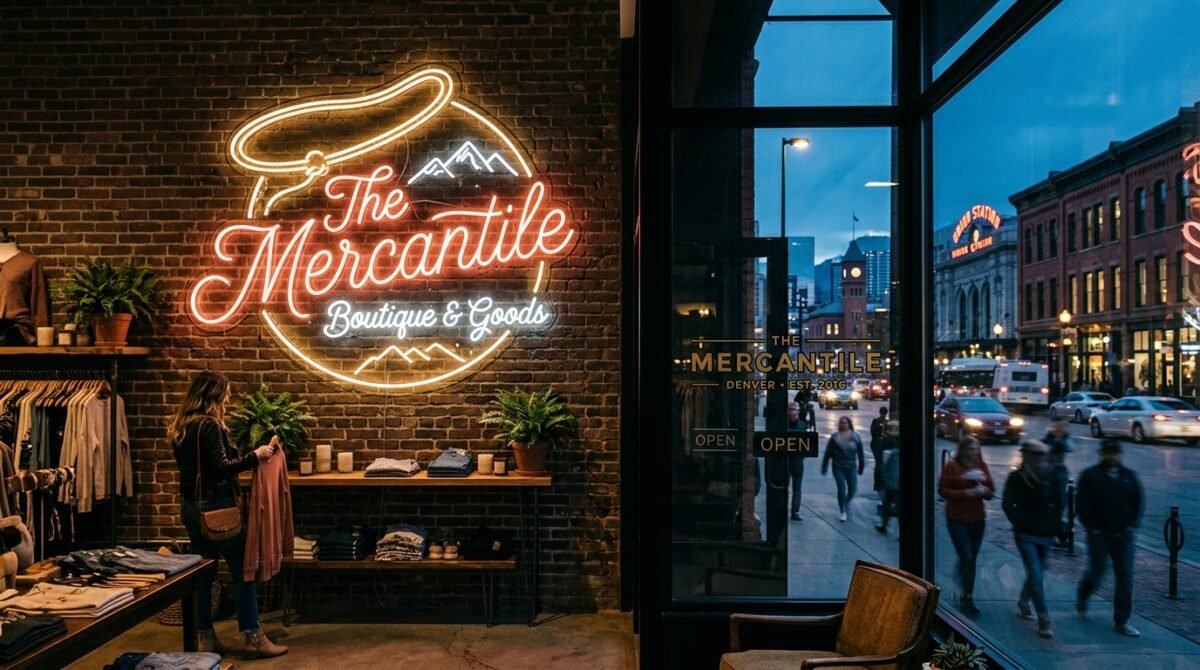
In a competitive market like Denver, your business sign is one of the most important branding tools you have. A well-designed sign not only attracts attention but also communicates your brand personality, builds trust, and increases foot traffic.
If your goal is to stand out from competitors, choosing the right type of signage can make a huge difference. In this guide, we will explore 10 creative business sign ideas that help your brand get noticed.
Acrylic storefront signs are clean, modern, and highly versatile.
They are ideal for businesses that want a professional and polished look without being too bold.
Best for:
Acrylic signs work well both indoors and outdoors and can be customized with printed graphics or dimensional lettering.
Channel letter signs are one of the most powerful options for visibility.
Each letter is individually illuminated, making your business name stand out both day and night.
Best for:
These signs create a premium and professional storefront presence.
LED neon signs are modern, colorful, and highly customizable.
They are perfect for businesses that want a creative and eye-catching aesthetic.
Best for:
LED neon signs are especially popular for social media friendly interiors.
Blade signs extend outward from the building, making them highly visible to pedestrians.
They are ideal for busy streets where foot traffic is high.
Best for:
Blade signs help customers find your location quickly.
Lightbox signs are illuminated panels that display your branding clearly at all times.
They are highly effective for businesses operating day and night.
Best for:
Lightbox signs provide strong visibility and affordability.
Metal backlit signs combine luxury materials with LED lighting for a premium effect.
They create a high-end brand image.
Best for:
These signs are ideal for businesses wanting a strong visual identity.
Interior signs help reinforce branding inside your workspace.
They are often used in lobbies, reception areas, and meeting rooms.
Best for:
They improve professionalism and brand consistency.
Moss lettering signs are eco-friendly and visually unique.
They bring a natural and modern aesthetic to interior branding.
Best for:
These signs are great for creating a memorable interior experience.
Push through signs use layered acrylic elements that glow when illuminated.
They create a dimensional lighting effect that stands out.
Best for:
These signs combine depth and lighting for a modern look.
Tube lightbox signs use tubular lighting designs inside illuminated boxes.
They are bold and highly visible, especially at night.
Best for:
These signs are perfect for businesses that want strong nighttime visibility.

When selecting a business sign, consider the following:
A well-chosen sign should reflect your brand identity and attract the right customers.
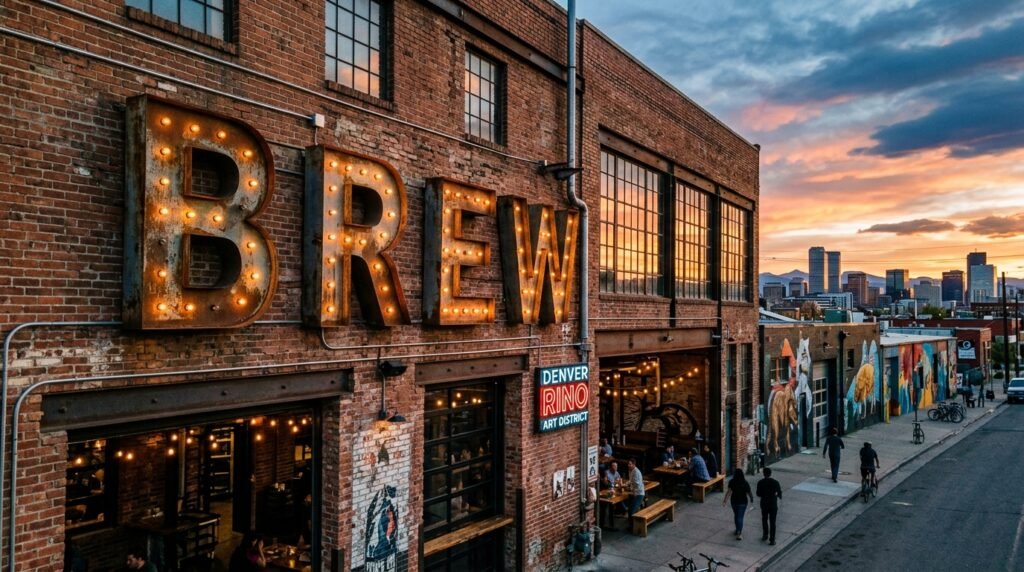
Denver is a competitive business environment, and visual branding plays a major role in customer decisions.
A strong sign can:
Investing in quality signage is one of the most effective long-term marketing decisions a business can make.
The right business sign can transform how customers perceive your brand. Whether you choose acrylic signs, channel letters, LED neon, blade signs, or metal backlit options, each sign type offers unique advantages.
For businesses in Denver, the key is choosing signage that balances visibility, style, and functionality.
A strong sign is not just a display, it is a powerful marketing asset that works for your business 24/7.
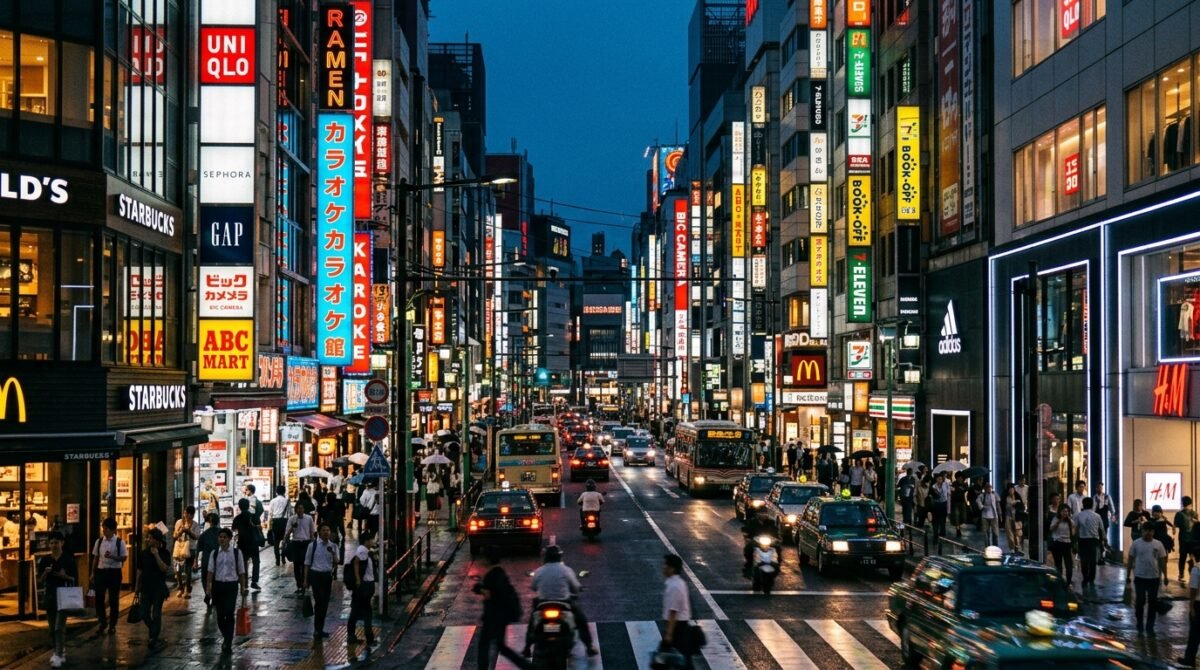
Illuminated business signs are one of the most powerful tools for attracting attention, increasing visibility, and strengthening brand identity. Whether your business operates during the day, at night, or both, illuminated signage ensures your brand is always visible.
In competitive markets like Denver, businesses rely on illuminated signs to stand out, attract more customers, and create a professional presence.
This guide will explain everything you need to know about illuminated business signs, including types, benefits, costs, and how to choose the right option for your business.
Illuminated business signs are signs that use internal or external lighting to enhance visibility. These signs are designed to remain visible in low light conditions, at night, or in indoor environments with limited lighting.
Most illuminated signs use LED technology due to its efficiency, durability, and brightness.
There are several types of illuminated signs commonly used by businesses in Denver.
Channel letter signs are three-dimensional letters that are individually illuminated.
Each letter contains LED lighting inside, making the sign highly visible from a distance.
Best for:
Key benefits:
Lightbox signs use a fully illuminated panel where graphics or text are displayed on a lighted surface.
These signs are commonly used in commercial plazas and storefronts.
Best for:
Key benefits:
LED neon signs replicate the look of traditional neon but use flexible LED tubing instead of glass.
They are popular for modern branding and creative spaces.
Best for:
Key benefits:
Acrylic backlit signs use LED lighting placed behind or within acrylic panels to create a glowing effect.
These signs are often used for professional indoor branding.
Best for:
Key benefits:
Metal backlit signs combine metal fabrication with LED lighting for a premium and luxurious appearance.
These are often used by high-end brands.
Best for:
Key benefits:
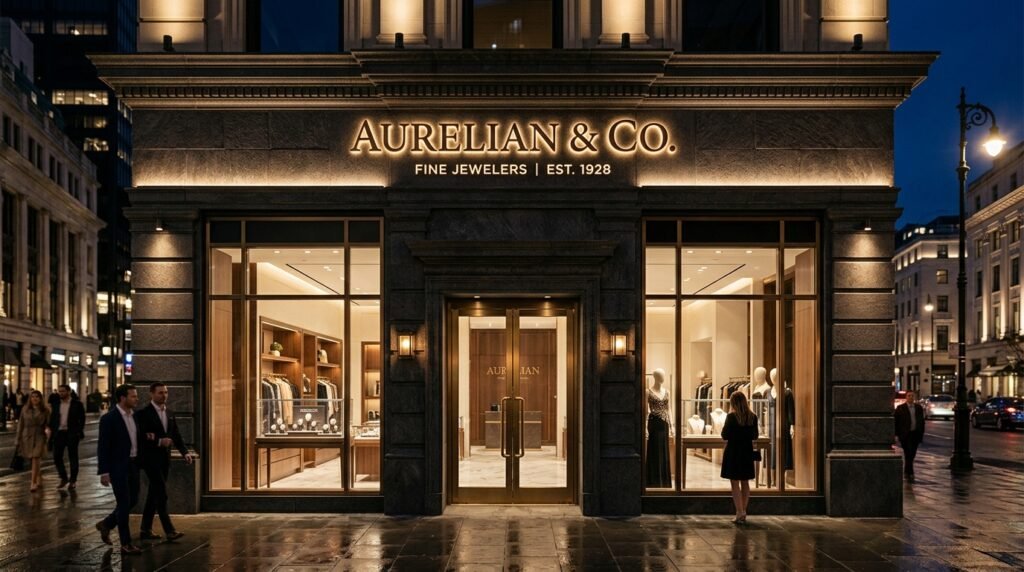
Illuminated signage is more than just decoration. It plays a direct role in customer behavior and business performance.
Illuminated signs ensure your business is visible at night and in low-light conditions. This increases your chances of attracting customers outside normal business hours.
A well-designed illuminated sign helps customers remember your brand. Consistent visibility builds familiarity and trust over time.
In busy commercial areas, illuminated signs help your business stand out from competitors who may use non-lit signage.
Unlike traditional advertising, illuminated signs work around the clock without ongoing costs. Once installed, they continuously promote your business.
The cost of illuminated signs depends on several factors:
While illuminated signs may require a higher initial investment, they often provide better long-term value due to durability and marketing impact.
The best illuminated sign depends on your business type:
Each option serves a different purpose, so the right choice depends on your branding goals.
Modern LED illuminated signs require very little maintenance.
Basic care includes:
Proper maintenance ensures long-lasting performance and consistent brightness.
Illuminated business signs are one of the most effective ways to increase visibility and strengthen brand identity. From channel letters to LED neon signs, each option offers unique advantages depending on your business needs.
For businesses in Denver, investing in high-quality illuminated signage can significantly improve customer attraction, brand recognition, and long-term growth.
Choosing the right illuminated sign ensures your business stands out both day and night in a competitive market.
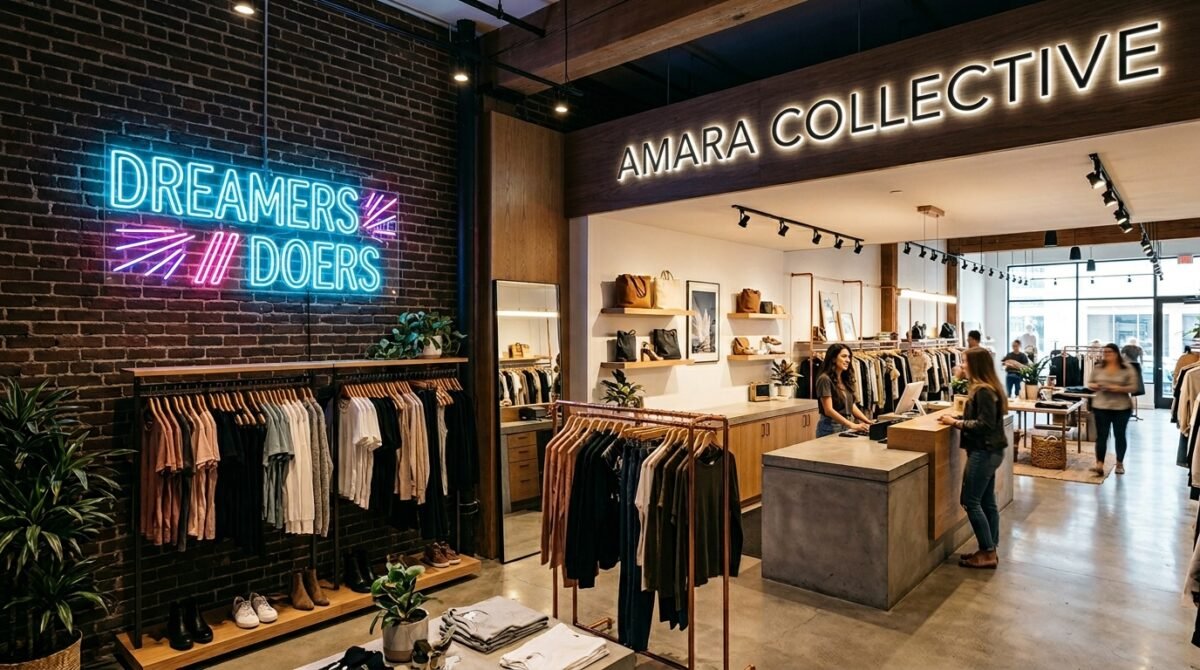
Choosing the right illuminated signage is an important decision for any business. Your sign is often the first thing customers notice, and it plays a major role in attracting attention, communicating your brand, and increasing visibility.
Two of the most popular lighting options today are LED signs and neon signs. While both create eye-catching displays, they differ significantly in cost, durability, energy efficiency, and overall performance.
In this guide, we will compare LED signs and neon signs so you can decide which option is best for your business in Denver.
LED signs use light-emitting diodes to create bright, energy-efficient illumination. They can be designed in many forms, including:
LED technology is widely used in modern signage because it is durable, flexible, and cost-effective over time.
Traditional neon signs are made using glass tubes filled with gas that lights up when electricity passes through them.
Neon signs are known for their classic glow and nostalgic aesthetic, often associated with bars, diners, and entertainment venues.
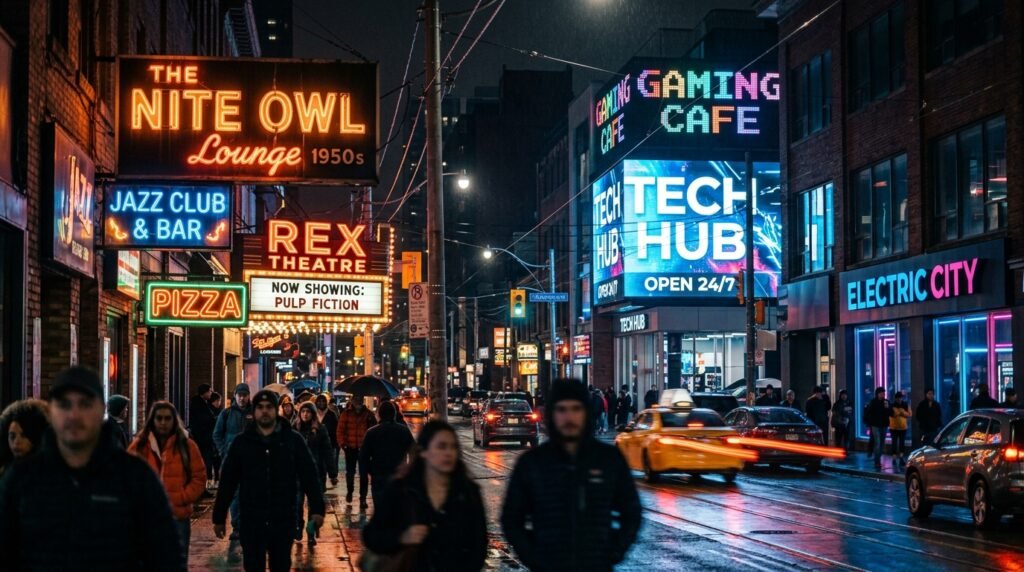
LED signs are significantly more energy efficient than traditional neon signs.
LED systems consume less power, which reduces electricity costs over time. Neon signs require more energy to operate due to gas discharge lighting.
If long-term operating cost is important, LED signs are the better choice.
LED signs are highly durable because they use solid-state components that resist shock and weather damage.
Neon signs are made of fragile glass tubes that can break easily and require professional repair.
LED signs typically require less maintenance and last longer, making them ideal for outdoor business use.
Initial cost can vary depending on design and size.
While neon signs can sometimes have lower upfront costs in simple designs, LED signs usually provide better long-term value.
LED signs are extremely bright and highly visible in both indoor and outdoor environments. They can be customized for different brightness levels.
Neon signs provide a softer, more ambient glow that is visually appealing but less intense than LED lighting.
If maximum visibility is your goal, LED signs are typically more effective.
LED technology allows for a wide range of design possibilities.
LED signs can be shaped into logos, letters, graphics, and custom designs with precision.
Neon signs are limited by glass tube bending techniques, which restrict complex designs.
For modern branding, LED signs offer far more flexibility.
LED signs operate at low voltage and produce less heat, making them safer for indoor and outdoor use.
Neon signs use high voltage and glass tubes, which can pose safety risks if damaged.
For businesses with high foot traffic or indoor installations, LED is the safer option.
The best choice depends on your business goals and branding style.
LED signs are ideal for retail stores, offices, salons, gyms, and restaurants looking for modern branding.
Neon signs are best for creative spaces, entertainment venues, and decorative branding.
When comparing long-term investment:
LED signs usually win because they:
Neon signs may have charm, but they tend to cost more in maintenance and energy use.
Both LED signs and neon signs have unique advantages.
If your goal is modern branding, durability, and cost efficiency, LED signs are the better choice.
If your goal is artistic appeal and nostalgic atmosphere, neon signs can still be a strong branding tool.
For most businesses in Denver today, LED signage provides the best balance of performance, visibility, and long-term value.
Choosing the right sign ensures your business stands out, attracts more customers, and builds a stronger brand identity in a competitive market.